Best Smart Deadbolts & Keyless Entry Systems (2026)
Evaluate biometric fingerprint readers, ANSI Grade 1 deadbolt mechanics, Wi-Fi bridges, auto-locking, and keyless emergency backup options.
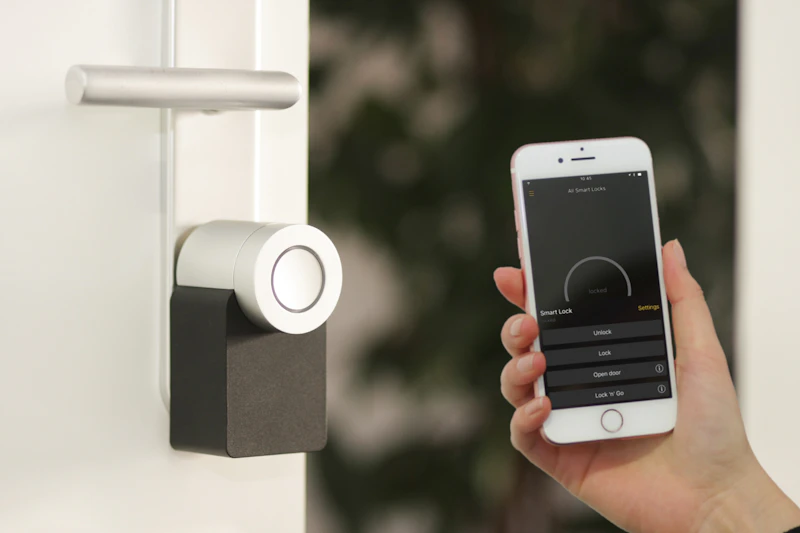
Executive Overview
Upgrading a residential entry door to a smart deadbolt replaces mechanical key handoffs with capacitive fingerprint sensors, time-limited PIN codes, and remote mobile unlock logs. However, a smart lock is first and foremost a physical security device that must withstand weather extremes, mechanical torque, and battery depletion. Before selecting a keypad or biometric deadbolt, homeowners must evaluate how the lock communicates with their home network (built-in Wi-Fi vs Bluetooth with an external Wi-Fi bridge), how its physical bolt is graded under ANSI/BHMA standards, and whether their existing door bore hole and backset match standard US dimensions.
Common Mistakes When Buying a Smart Lock
Key Pitfall #1
Built-In Wi-Fi vs Bridge Battery Trade-off: Constant 2.4GHz Wi-Fi radios inside the lock chassis consume significantly more power than Bluetooth Low Energy (BLE) locks paired with a plug-in Wi-Fi bridge.
Key Pitfall #2
Door Misalignment & Deadbolt Jamming: Motorized deadbolts use low-voltage DC gears. If you currently have to push or pull your door to turn the deadbolt key, a motorized smart lock will bind unless the strike plate is adjusted.
Key Pitfall #3
Lack of Emergency Power / Mechanical Override: Keyless-only locks without a physical cylinder or an external USB-C emergency power port can leave residents locked out if battery warnings are ignored.
Key Pitfall #4
Ignoring Exterior IP Weather Ratings: Exterior keypads exposed to rain or sub-freezing winters require sealed rubber gaskets and rated operating temperature ranges (-22°F to 140°F).
Essential Technical Specifications Checklist
- ANSI/BHMA A156.36 Security Grades (Grade 1, 2, 3)
- ANSI/BHMA certifies lock durability and impact resistance. Grade 1 represents commercial/heavy-duty residential security (250,000+ cycles and 10 hammer strikes); Grade 2 covers enhanced residential durability (150,000 cycles); Grade 3 is basic residential certification.
- Biometric Capacitive Fingerprint Sensors
- Semiconductor capacitive sensors read 3D dermal ridges in 0.3 to 0.5 seconds and reject 2D printed photos, storing fingerprint templates locally in encrypted on-device memory rather than the cloud.
- Wireless Architecture (Built-In Wi-Fi vs BLE + Bridge)
- Locks with built-in Wi-Fi connect directly to a 2.4GHz router with zero extra hubs (typically 3–5 months on 4–8 AA batteries). Locks using Bluetooth + a plug-in Wi-Fi gateway offload Wi-Fi traffic to the wall outlet, extending AA battery life to 6–10 months.
- Standard US Door Prep Dimensions
- Most smart deadbolts require a standard 2-1/8 inch (54mm) cross bore hole, a 1-inch (25mm) edge bore, adjustable 2-3/8 inch or 2-3/4 inch backset, and door thickness between 1-3/8 inch and 2 inches.
Frequently Asked Questions
What happens if the batteries die while I am outside?
Quality smart deadbolts include three layers of protection: low-battery alerts weeks in advance, a mechanical key cylinder override, and an external USB-C emergency power port on the bottom of the exterior escutcheon where a portable power bank can temporarily power the keypad.
Can I install a smart deadbolt myself with a standard screwdriver?
Yes. If your door already has a standard single-cylinder deadbolt with a 2-1/8 inch cross bore and 2-3/8 or 2-3/4 inch backset, installation typically takes 15 to 25 minutes using only a #2 Phillips screwdriver.
Do smart locks work on 5GHz Wi-Fi networks?
Most smart locks and Wi-Fi bridges operate on the 2.4GHz Wi-Fi band because 2.4GHz signals penetrate solid wood and metal exterior doors with longer range and lower power consumption than 5GHz.